Male Rhinoplasty in Calgary: A Different Approach for a Different Anatomy
Male rhinoplasty is not simply rhinoplasty performed on a male patient. The goals, anatomy, proportions, and surgical judgment are often different. Many men want a straighter bridge, a stronger profile, better breathing, or correction after an old injury — without looking “done.” A good result usually protects the features that keep the face masculine while correcting the parts of the nose that feel too prominent, crooked, heavy, or obstructed.
Table of contents
- Why male rhinoplasty needs its own approach
- What usually makes a male nose look balanced
- Common reasons men ask about rhinoplasty
- Cosmetic and functional goals often overlap
- Anatomy that can affect the surgical plan
- Male rhinoplasty vs. female rhinoplasty
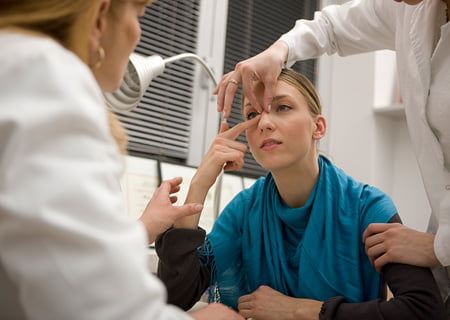
- What happens during consultation
- Recovery after a male nose job
- Recovery chart: what usually changes over time
- How to keep the result natural
- Risks and realistic expectations
- Questions to ask before surgery
- Extended FAQ
Why male rhinoplasty needs its own approach
A male nose job is not about making the nose smaller at all costs. In many cases, the opposite is true: the surgeon has to preserve enough structure so the nose still fits a stronger brow, jawline, cheekbone pattern, and overall facial frame.
That is why male rhinoplasty tends to be more conservative in certain areas. Removing too much from the bridge, narrowing the nose too aggressively, or lifting the tip too far can create a result that looks out of place on a male face. The goal is usually not delicacy. It is balance.
People also search
Dr. Kristina Zakhary highlights that for many men, the best result is the one that does not announce itself. The dorsal hump is smoother. The bridge is straighter. The tip looks cleaner but not pinched. The nose still has character, just less distraction.
Rhinoplasty can also address breathing concerns when the internal structure of the nose is part of the problem. The American Society of Plastic Surgeons notes that correction of a deviated septum, a common cause of breathing impairment, may involve adjusting nasal structures to improve alignment and airflow.
What usually makes a male nose look balanced
There is no single “male nose.” Ethnicity, facial width, skin thickness, chin projection, forehead shape, and personal preference all matter. Still, male rhinoplasty often protects certain features more carefully than a typical feminizing rhinoplasty plan would.
A balanced male rhinoplasty often keeps:
| Feature | Common male rhinoplasty goal | Why it matters |
|---|---|---|
| Bridge | Straighter, stronger, less scooped | A very low or curved bridge can soften the profile too much |
| Tip | Defined but not overly narrowed | Over-refinement can look surgical or feminized |
| Rotation | Usually modest | A highly upturned tip may not suit many male faces |
| Width | Balanced with the cheeks and jaw | Over-narrowing can make the nose look pinched |
| Profile | Smoother, but not weak | Many men still want some strength in the nasal line |
| Breathing | Considered early, not as an afterthought | Cosmetic changes should not compromise airflow |
A good consultation should not start with a template. It should start with the patient’s face.
Common reasons men ask about rhinoplasty
Men usually come in with practical, specific concerns. They may not describe the goal as “beauty.” More often, they want the nose to stop dominating the face, look less crooked in photos, or feel easier to breathe through.
Common concerns include:
| Concern | What the patient may notice | Possible surgical focus |
|---|---|---|
| Dorsal hump | A bump on the bridge, especially from the side | Bridge reduction and profile smoothing |
| Crooked nose | Nose pulls to one side in photos or mirrors | Straightening nasal bones/cartilage where possible |
| Old sports injury | Flattened, twisted, or asymmetric nose after trauma | Structural correction and support |
| Breathing difficulty | One side feels blocked, mouth breathing, poor sleep | Septum, nasal valves, turbinates, or combined functional work |
| Heavy or drooping tip | Tip looks low, especially when smiling | Tip support and conservative reshaping |
| Wide nasal bones | Nose feels broad from the front | Controlled narrowing if appropriate |
| Overly large nose | Nose feels out of proportion to the rest of the face | Size reduction while preserving masculine structure |
Some men arrive because they want a visible cosmetic change. Others arrive because they cannot breathe well and only later mention that they also dislike the shape. Both are valid.
Cosmetic and functional goals often overlap
A nose can look crooked because the internal support is crooked. A hump can be cosmetic, traumatic, structural, or a mix of all three. A man may ask for a straighter nose and also need the septum assessed.
This is where rhinoplasty and septoplasty may overlap. Rhinoplasty focuses on the outside shape of the nose, while septoplasty focuses on the septum inside the nose to improve breathing. In some cases, the two procedures can be combined when both form and function need to be addressed.
Functional concerns may include:
| Symptom or issue | Why it matters before a male rhinoplasty |
|---|---|
| One-sided nasal blockage | May suggest septal deviation, valve narrowing, or other internal obstruction |
| History of broken nose | Old trauma can affect both appearance and airflow |
| Snoring or mouth breathing | Not always caused by the nose, but worth discussing |
| Poor airflow during exercise | Important for active patients and athletes |
| Previous nasal surgery | Scar tissue and weakened support can change the plan |
A cosmetic-only approach can miss important breathing problems. A function-only approach may improve airflow but leave visible asymmetry. The consultation should look at both.
Anatomy that can affect the surgical plan
Male noses often have features that require a different hand in surgery. This does not mean the operation is harder in every case, but it does mean the plan has to be realistic.
Thicker skin
Many male patients have thicker nasal skin, especially around the tip. Thick skin can hide fine definition, which means the surgeon may focus more on structure and support rather than tiny surface changes. It can also mean swelling takes longer to settle.
Stronger cartilage
Male nasal cartilage is often stronger and more resistant. That can be helpful for support, but it can also require firmer structural reshaping.
Heavier bridge and tip
A strong bridge or heavy tip may need correction, but aggressive reduction can create an unnatural result. The aim is usually to reduce distraction, not erase the nose.
Facial hair and skin quality
Beard lines, shaving irritation, oilier skin, and acne history can matter during planning and recovery. These details are not the main part of rhinoplasty, but they can affect incision care, swelling, and how the nose looks as it heals.
Previous injuries
Men are more likely to bring up injuries from hockey, football, boxing, skiing, cycling, or other sports. Old trauma may leave the bones, cartilage, and septum misaligned in different directions.
Male rhinoplasty vs. female rhinoplasty
This comparison is general. Some men want a softer nose. Some women want a straighter or stronger bridge. The right plan always depends on the individual.
| Surgical/aesthetic point | Common male rhinoplasty preference | Common female rhinoplasty preference |
|---|---|---|
| Bridge shape | Straighter, stronger, less scooped | May be softer or gently curved |
| Tip refinement | Clean, defined, not overly narrowed | Often more refined or delicate |
| Tip rotation | Conservative lift if needed | May tolerate slightly more rotation |
| Overall size reduction | Careful, balanced reduction | Often more willingness to reduce apparent size |
| Profile goal | Strong but smoother | Balanced, sometimes softer |
| Main risk aesthetically | Looking overdone or demasculinized | Looking pinched, over-rotated, or mismatched |
The difference is not about gender stereotypes. It is about proportion. A nose that looks excellent on one face may look wrong on another.
What happens during consultation
A proper male rhinoplasty consultation should cover more than “what do you dislike about your nose?” It should include a careful look at facial balance, skin thickness, breathing, old injuries, and the kind of result the patient would actually feel comfortable living with.
A consultation may include:
| Consultation step | What it helps clarify |
|---|---|
| Facial assessment | Whether the nose is truly too large, crooked, wide, or out of balance |
| Breathing history | Whether functional issues need to be assessed |
| Trauma history | Whether old fractures or sports injuries shaped the nose |
| Skin and cartilage evaluation | How much definition is realistic |
| Photo review | How the nose looks from front, side, three-quarter, and base views |
| Goal discussion | Whether the patient wants subtle correction or a more noticeable change |
| Recovery planning | Work, sports, travel, social downtime, and privacy concerns |
Good planning is especially important for men who want a natural result. “Just make it smaller” is rarely the right instruction.
Recovery after a male nose job
Most men should plan for visible bruising and swelling in the first stage of recovery. Many return to non-physical work once the splint is removed and they feel comfortable being seen, often around the one-to-two-week mark, depending on the case and the surgeon’s instructions.
Swelling lasts longer than most people expect. Cleveland Clinic notes that swelling may be noticeable for about four to six weeks, gradually decrease after three months, and continue settling up to about one year as the nose fully heals.
For men with thicker skin, tip swelling may linger. This is normal in many cases, but it can be frustrating if the patient expects the final result too early.
Work, privacy, and social downtime
Many men want to keep surgery low-key. That can be possible, but the first week is difficult to hide. Splinting, bruising, swelling, and congestion are expected parts of early recovery.
A practical plan may include:
| Situation | Practical planning note |
|---|---|
| Office work | Many patients take 1–2 weeks away or work remotely at first |
| Client-facing work | Extra time may help if bruising is a concern |
| Heavy labour | Usually needs more caution and surgeon clearance |
| Gym | Light activity returns before heavy lifting |
| Contact sports | Usually delayed longer because nasal impact can affect healing |
| Glasses | May need special instructions to avoid pressure on the bridge |
| Shaving | Usually manageable, but care is needed around tenderness and swelling |
Recovery chart: what usually changes over time
This is a general guide, not a personal recovery schedule. The surgeon’s instructions should always come first.
| Recovery stage | What men commonly notice | What to be careful with |
|---|---|---|
| Days 1–3 | Congestion, pressure, swelling, possible bruising | Rest, head elevation, no nose blowing unless cleared |
| Days 4–7 | Swelling peaks for many patients; splint still present | Avoid bending, heavy lifting, alcohol, and anything that raises swelling |
| Week 2 | Splint often removed; bruising improves | Nose may look swollen or “not like final result” |
| Weeks 3–6 | Social appearance improves; swelling still present | Exercise usually returns gradually with medical clearance |
| Months 2–3 | Bridge looks more settled; tip may still feel firm or puffy | Avoid judging final tip definition too early |
| Months 4–6 | More definition appears, especially in thinner skin | Contact risk still needs individual clearance |
| 6–12+ months | Final shape becomes clearer | Thick skin and revision cases may take longer |
Simple swelling pattern chart
| Time after surgery | Typical visible swelling level |
|---|---|
| Week 1 | High |
| Week 2 | Moderate to high |
| Weeks 3–6 | Moderate |
| Months 2–3 | Mild to moderate |
| Months 4–6 | Mild |
| 6–12+ months | Subtle residual swelling, often most noticeable in the tip |
The important point: a male rhinoplasty result should not be judged too early, especially if the tip skin is thick.
How to keep the result natural
Most men asking for rhinoplasty are not trying to look like a different person. They usually want people to notice their face, not their nose.
A natural-looking male rhinoplasty often depends on restraint:
| Natural-result principle | What it means in practice |
|---|---|
| Preserve enough bridge strength | Avoid an overly scooped profile |
| Avoid over-rotating the tip | Keep the nose from looking too upturned |
| Do not over-narrow the front view | Maintain facial balance and nasal function |
| Respect skin thickness | Do not promise tiny definition that the skin cannot show |
| Correct asymmetry carefully | Improvement is realistic; perfect symmetry is not |
| Protect breathing | Cosmetic narrowing should not compromise airflow |
A strong male result can still be refined. Refined does not have to mean small, narrow, or delicate.
Risks and realistic expectations
Rhinoplasty is a real surgical procedure, and it carries risks. These may include bleeding, infection, anesthesia-related risks, scarring, asymmetry, persistent swelling, breathing changes, numbness, dissatisfaction with appearance, or the possible need for revision surgery . Septoplasty and functional nasal surgery also carry risks; Mayo Clinic lists bleeding, infection, anesthesia reaction, ongoing symptoms, septal perforation, altered smell, and other possible concerns with septoplasty.
The most important expectation is this: improvement is realistic; perfection is not. A nose that has been broken, twisted, previously operated on, or affected by thick skin may not behave like a simple textbook case.
A careful surgeon should explain:
| Expectation | More realistic way to think about it |
|---|---|
| “I want it perfectly straight” | The goal is meaningful improvement; perfect symmetry is uncommon |
| “I want no one to know” | Subtle results are possible, but early recovery is visible |
| “I want the swelling gone fast” | Swelling improves gradually and can last months |
| “I want a smaller nose” | Smaller is not always better for a male face |
| “I want better breathing” | Breathing must be assessed structurally; not all blockage has the same cause |
Questions to ask before surgery
Before booking male rhinoplasty, it helps to ask direct questions:
| Question | Why it matters |
|---|---|
| Do my cosmetic and breathing concerns need to be treated together? | Some patients need combined structural planning |
| Is my skin thickness likely to affect tip definition? | Thick skin can change what is realistic |
| How conservative should we be with the bridge? | Over-reduction can weaken the profile |
| How much tip rotation suits my face? | Too much lift can look unnatural |
| What changes would make my nose look less masculine? | This helps avoid over-refinement |
| When can I return to the gym or contact sports? | Activity timing affects healing and safety |
| What result is realistic from the front view? | Front-view changes are often subtler than profile changes |
| What are the revision risks in my case? | Important for trauma, thick skin, and complex asymmetry |
Extended FAQ
Does male rhinoplasty look different from female rhinoplasty?
Often, yes. Male rhinoplasty usually aims to keep a stronger bridge, a straighter profile, and a tip that is refined without looking overly narrow or lifted. The goal is not simply to reduce the nose. It is to make the nose fit the male face better.
What is the difference between a male nose job and rhinoplasty for women?
The surgical tools may be similar, but the aesthetic plan is often different. In men, surgeons are usually more cautious about lowering the bridge too much, rotating the tip too far, or narrowing the nose aggressively. These changes can make the nose look less natural on a male face.
Will male rhinoplasty make my face look less masculine?
It should not, if the plan is designed properly. A conservative male rhinoplasty protects the features that keep the face strong: bridge height, nasal support, appropriate width, and a natural tip position.
Can a male rhinoplasty still look subtle?
Yes. Many men choose rhinoplasty specifically because they want a subtle result. Common subtle changes include smoothing a hump, straightening a crooked bridge, reducing a heavy tip, or improving balance from the side view.
How long is recovery after male rhinoplasty?
Early recovery often takes one to two weeks, depending on swelling, bruising, splint timing, and work needs. Deeper healing takes much longer. Swelling can continue improving for several months, and the final result may take around one year or longer to fully settle, especially in thicker skin.
Is swelling worse for men?
Not always, but thicker skin can hold swelling longer, particularly in the nasal tip. Some male patients need more patience before the final definition is visible.
Can I go back to work after one week?
Some men can return to remote or desk-based work after about a week, but most return to work after 2 weeks especially once the splint is removed. If the job is public-facing, physically demanding, or involves dust, heat, lifting, or impact risk, more time may be needed.
When can I go back to the gym?
Light activity usually returns before intense training, but timing depends on the surgeon’s instructions and the details of the procedure. Heavy lifting and high-intensity workouts can increase swelling early in recovery.
When can I return to hockey, boxing, martial arts, football, or contact sports?
Contact sports usually require a longer break because a hit to the nose can affect healing. The exact timing should come from the surgeon, based on how stable the nasal bones and cartilage are after surgery.
Can male rhinoplasty fix a broken nose?
It may improve the appearance of a nose that healed crooked after trauma. If the septum or internal structures were affected, functional correction may also be discussed. Severe or old injuries can be more complex than a first-time cosmetic rhinoplasty.
Can rhinoplasty improve breathing?
Yes, in selected cases. If breathing difficulty is related to a deviated septum, nasal valve collapse, trauma, or structural narrowing, functional nasal surgery may help. The cause of obstruction should be assessed before surgery and can be multifactorial and so breathing improvement cannot be guaranteed.
What is the difference between rhinoplasty and septoplasty?
Rhinoplasty changes the shape of the nose. Septoplasty corrects the septum inside the nose to improve airflow. Some patients need one procedure; others may benefit from both.
Will insurance cover a male nose job?
Cosmetic rhinoplasty is usually elective. Functional nasal surgery may be handled differently depending on the patient’s plan, symptoms, documentation, and medical assessment. Coverage questions should be checked directly with the insurer and clinic. Functional surgery does not reduce the price of the cosmetic surgery.
Can I choose a celebrity nose?
Photos can help explain taste, but copying another person’s nose is not realistic. The right nose must fit your own bones, skin, cartilage, face shape, and breathing needs.
How do I avoid an overdone result?
Choose a plan that respects your face rather than chasing a dramatic reduction. For men, that usually means preserving bridge strength, avoiding excessive tip lift, and keeping enough width and support for a natural look.
Is male rhinoplasty painful?
Most patients describe pressure, congestion, swelling, and discomfort more than sharp pain. Pain control instructions are provided after surgery.
Will people know I had surgery?
During early recovery, probably yes if they see you closely. Once swelling and bruising improve, subtle male rhinoplasty results may not be obvious to others. Many people simply look more rested, balanced, or less “nose-focused.”
Can rhinoplasty improve my side profile?
Yes, the side profile is one of the common reasons men consider rhinoplasty. A dorsal hump, drooping tip, or overly projected nose can often be improved, but the goal should still suit the rest of the face.
Can rhinoplasty change the front view?
Yes, but front-view changes are often more conservative than side-view changes. Straightening, narrowing, or tip refinement can help, but the nose must still function well and match the face.
Is male rhinoplasty worth it?
It can be worth it for men who have clear concerns, realistic expectations for improvement rather than perfection, and a surgical plan that respects both appearance and breathing. The best candidates are not looking for a completely different face. They want their nose to fit better.
Key takeaway
Male rhinoplasty requires judgment, restraint, and respect for facial structure. A good result should not make the nose look generic or overly refined. It should make the face look more balanced while preserving the features that make it look natural, strong, and unmistakably male.