How Thick Skin Affects Rhinoplasty Surgery
What changes, what doesn’t, and what patients usually notice later
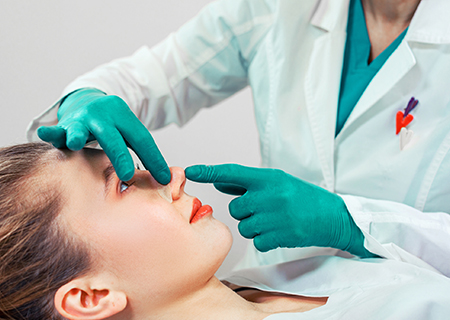
Thick nasal skin does not prevent a successful rhinoplasty , but it changes how the result appears and how long it takes to see it. The structure underneath can be reshaped precisely, but the skin softens that definition and holds swelling longer, especially at the tip. Most patients still achieve a clear improvement, just not the same sharpness or timeline seen with thinner skin.
Table of Contents
- What surgeons mean by “thick skin”
- Why it changes outcomes, not just recovery
- Where it matters most on the nose
- How surgical technique adjusts
- Swelling patterns and healing timeline
- What results look like over time
- Expectation gaps (and why they happen)
- Thick vs thin skin — practical comparison
- Recovery chart
- Clinical perspective
- Extended FAQ
What surgeons mean by “thick skin”
“Thick skin” in rhinoplasty is not about your general skin type. It is specific to the nasal envelope, especially the lower third.
In practical terms, thicker nasal skin tends to:
- contain more sebaceous tissue
- feel heavier and less mobile
- sit over cartilage with more volume
People also search
From a visual standpoint, this usually presents as:
- a rounder nasal tip
- less visible contour detail
- softer transitions between areas
This becomes important because rhinoplasty works underneath the skin. The skin then reveals, or partially masks, that work.
Why it changes outcomes, not just recovery
A common assumption is that thick skin only affects swelling. In reality, it also affects how the final shape reads.
With thinner skin:
- small refinements show clearly
- edges appear sharper
- definition appears earlier
With thicker skin:
- detail is softened
- structure is less visible at first
- refinement takes longer to emerge
This does not mean the surgery is less precise. It means the visibility of that precision is different.
Where it matters most on the nose
The effect is not equal across the nose.
It tends to concentrate in the lower third.
| Area | What patients often notice |
|---|---|
| Tip | less sharp definition |
| Supratip area | longer swelling retention |
| Bridge | usually less affected |
| Profile view | visible change, but softer lines |
That’s why many patients feel the bridge looks “done” earlier, while the tip seems slower to follow.
How surgical technique adjusts
This is where surgical planning changes meaningfully.
With thick skin, the approach shifts away from subtle reduction and toward structural support.
That often includes:
- stronger tip support techniques
- precise cartilage shaping
- use of grafts where needed
The goal is not to reduce aggressively, but to build a framework that can still show through the skin.
Reducing too much structure in thick skin cases can lead to:
- loss of projection
- a flat or undefined tip
- results that look smaller, but not refined
This is one of the more common technical pitfalls in less experienced hands.
Swelling patterns and healing timeline
Swelling behaves differently in thicker skin, and this is where most concerns arise.
Typical pattern:
- early swelling looks similar to other patients
- tip swelling lingers longer
- firmness in the tip can persist for months
Patients often describe it as:
- “it improved, then stayed the same for a while”
That plateau phase is normal.
General healing progression
| Timeframe | What tends to happen |
|---|---|
| First weeks | swelling dominates shape |
| 2–3 months | structure visible, still soft |
| 4–6 months | gradual refinement |
| 9–18 months | closer to final appearance |
This is not a strict timeline, but it reflects common patterns seen in practice.
What results look like over time
The key difference is not whether improvement happens, it’s how it develops.
With thick skin:
- results appear more gradual
- transitions stay softer
- definition builds slowly rather than appearing sharply
In many cases, the final outcome looks:
- natural rather than sculpted
- balanced rather than sharply defined
That can be an advantage, depending on the goal.
Expectation gaps (and why they happen)
Most dissatisfaction in thick skin rhinoplasty doesn’t come from poor surgery. It comes from mismatched expectations.
Typical gaps include:
- expecting early sharp definition
- comparing with thin-skin results online
- underestimating how long swelling lasts
When expectations are aligned early:
- recovery tends to feel more predictable
- fewer “something is wrong” concerns appear mid-recovery
This is largely a communication issue, not a technical one.
Thick vs thin skin: practical comparison
| Factor | Thick skin | Thin skin |
|---|---|---|
| Definition | softer | sharper |
| Swelling duration | longer | shorter |
| Early visibility | delayed | quicker |
| Final refinement | gradual | more immediate |
| Visibility of imperfections | lower | higher |
Neither is objectively better. Each presents different constraints and advantages.
Recovery chart
What patients usually experience
| Phase | Typical feeling | What’s happening |
|---|---|---|
| Early weeks | noticeable swelling | tissue response dominates |
| 1–3 months | improvement, but soft | swelling slowly resolving |
| 3–6 months | gradual sharpening | skin adapting to structure |
| 6–12 months | refinement continues | closer to final result |
Simple visual summary
| Element | Early stage | Later stage |
|---|---|---|
| Swelling | high | reduced |
| Definition | low | improved |
| Tip firmness | present | gradually softens |
| Patient confidence | fluctuates | stabilises |
Clinical perspective
At Facial Cosmetic Surgery Clinic, thick skin cases are approached with different planning from the outset.
Dr. Kristina Zakhary’s background in facial plastic and reconstructive surgery, combined with fellowship training in facial procedures, informs that approach. In this setting, rhinoplasty is not treated as a standardised procedure, especially when skin characteristics vary.
In practice, that means:
- prioritising structure over reduction
- planning for extended swelling phases
- discussing realistic outcomes early
Patients who understand these variables before surgery tend to move through recovery with fewer concerns, particularly during the slower phases where visible change is gradual.
Extended FAQ
Can thick skin prevent a good rhinoplasty result?
No. It does not prevent improvement, but it influences how that improvement appears. The structure can be refined successfully, but the visible result is typically softer and develops more gradually. Patients still achieve meaningful changes, just not the same level of sharp definition seen with thinner skin.
Why does the tip stay swollen longer with thick skin?
Thicker skin contains more tissue and holds fluid more easily. After surgery, that translates into longer-lasting swelling, particularly at the tip. This is why patients often feel that the bridge improves earlier while the tip takes more time.
Is it possible to thin the skin during surgery?
Not in a predictable or significant way. Rhinoplasty focuses on reshaping cartilage and bone. While certain techniques can influence how the skin sits, the actual thickness of the skin is largely unchanged.
Why does my nose look less defined than expected at first?
Early swelling masks the underlying structure. In thicker skin, this effect is stronger and lasts longer. What you see in the first few months is not the final definition, it’s an intermediate stage.
Will my nose still look smaller after surgery?
Yes, but the change may appear more subtle. The structure is reduced or reshaped, but thicker skin softens the visual edges, so the result looks less sharp even when technically precise.
Does thick skin mean I will need revision surgery?
Not necessarily. Revision depends on multiple factors, not just skin type. However, revisions in thick skin cases require careful planning because the same limitations still apply.
Why do results from other patients look sharper than mine?
In many cases, that comes down to skin thickness. Patients with thinner skin show detail more clearly, including both improvements and imperfections. Comparisons without accounting for this difference can be misleading.
Can anything speed up the healing process?
There is no reliable way to significantly speed up swelling resolution. Following post-operative care, maintaining general health, and allowing time are the main factors. Attempting to accelerate the process often leads to frustration rather than improvement.
When should I expect to see the final result?
Most patients with thicker skin approach their final result closer to 18-24 months, sometimes longer for the tip. Earlier improvements are visible, but refinement continues gradually.
Is thick skin an advantage in any way?
Yes. It tends to hide small irregularities in the underlying structure, which can make results appear smoother overall. The trade-off is reduced sharpness.