Ozempic Face: Facial Changes After GLP-1 Weight Loss and How to Correct Them

Rapid weight loss with GLP-1 medications can deflate deep and superficial facial fat compartments, exposing laxity and altering contours. These changes are structural, but fully correctable with targeted volume restoration and tissue repositioning.
Table of Contents
- Overview
- Why Rapid Weight Loss Alters the Face
- Anatomical Changes Seen With GLP-1 Weight Reduction
- Typical Before-and-After Patterns
- Who Is Most Prone to Facial Deflation
- How to Limit These Changes During Weight Loss
- Treatment Categories
- Detailed Treatment Options
- When to Consider Surgical Correction
- Q&A
- References
1. Overview
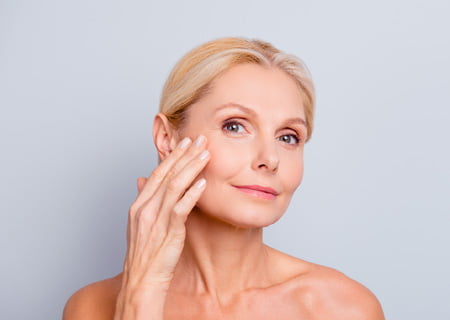
The term “Ozempic face” describes the set of facial changes that can follow rapid weight loss induced by GLP-1 medications such as Ozempic, Wegovy, or Mounjaro. The concern isn’t the medication itself but the speed at which facial fat compartments shrink. When deep fat volume reduces faster than the overlying skin can adapt, hollowness and early descent appear.
Patients who lose weight gradually typically avoid this effect. Those who lose a higher percentage of body weight within a short period see the most dramatic facial change.
2. Why Rapid Weight Loss Alters the Face
People also search
Facial shape depends on a network of deep and superficial fat pads. These pads sit in distinct compartments separated by anatomical retaining ligaments. When weight loss is slow, each compartment tapers evenly. With rapid loss, several predictable shifts occur:
- Deep medial cheek fat decreases first, flattening the mid-face.
- Lateral cheek fat provides support; when it thins quickly, lower-face descent becomes more visible.
- Periorbital fat diminishes, exposing natural orbital hollowing.
- Temporal fat pads shrink, producing concavity near the hairline.
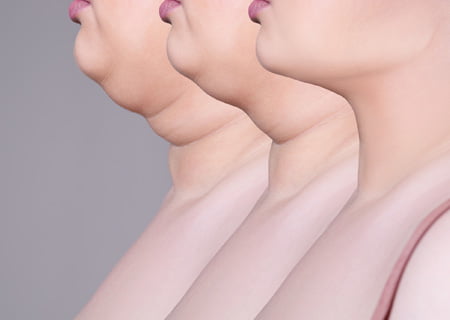
- Jawline fat compartments reduce, revealing early jowling even in younger patients.
These changes reveal the underlying scaffolding: bone projection, ligament tension, and skin elasticity. This is why two patients with similar weight loss can look very different.
3. Anatomical Changes Seen With GLP-1 Weight Reduction
Although patterns vary, several findings are consistent.
Mid-Face Deflation
The transition between the lower eyelid and cheek becomes sharper as the deep medial fat pad loses volume. What once formed a smooth convex curve becomes a hollow trough. Cheek projection softens, and the lower lid appears longer.
Jawline and Lower-Face Changes
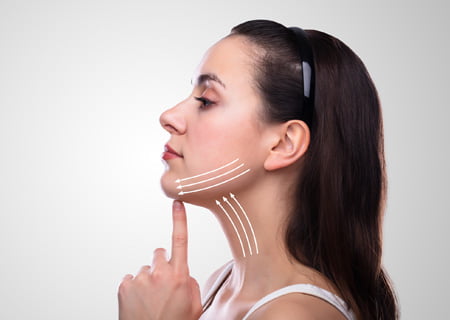
As the superficial fat layer thins, it no longer buffers the pull of the masseter and platysma. The area in front of the jowl ligament loses support, while the lower cheek drifts downward. Even mild laxity becomes apparent.
Periorbital Hollowing
Fat compartments around the eyes are sensitive to metabolic shifts. Hollowing under the eyes often appears early and gives a tired or sunken look.
Skin Elasticity Mismatch
Skin does not shrink at the same rate as fat loss. Where elasticity is reduced — sun exposure, smoking, age — deflation exposes fine wrinkles and etched lines that weren’t previously noticeable.
4. Typical Before-and-After Patterns
Photographs taken six to twelve months apart show predictable transitions.
| Region | Before | After Rapid GLP-1 Weight Loss |
|---|---|---|
| Cheeks | Rounded, supported | Flattened mid-face, reduced lift |
| Under-eyes | Smooth contour | Deeper tear troughs |
| Jawline | Straight or slightly soft | Early jowls, visible ligament descent |
| Mouth area | Subtle folds | Deeper nasolabial and marionette folds |
| Temples | Full | Concave or shadowed |
| Skin | Smooth | Fine crêping, laxity |
The cumulative effect resembles 7–10 years of aging, condensed into months.
5. Who Is Most Prone to Facial Deflation
| Factor | Effect |
|---|---|
| Age 40+ | Collagen loss magnifies hollowing and descent. |
| Large weight loss (>15–20%) | Faster change across all compartments. |
| Thin facial structure pre-treatment | More hollowing, less reserve volume. |
| High UV exposure | Skin adapts poorly to new contours. |
| Smoking | Reduced elasticity; sharper folds. |
Younger patients typically experience contouring, not sagging, because their ligament structure and skin quality remain strong.
6. How to Limit These Changes During Weight Loss
Several practical strategies help maintain facial support during GLP-1 therapy:
- Avoid steep dose escalations; slower titration leads to steadier loss.
- Maintain protein intake to support collagen-rich tissues.
- Stay well hydrated, as deep fat pads contain water.
- Use sun protection daily to preserve elasticity.
- Avoid smoking, which accelerates structural thinning.
- Monitor facial volume every 4–6 weeks, especially if you are older than 40.
No cream or topical treatment prevents fat loss. The rate of loss—not the medication—determines the outcome.
7. Treatment Categories
Correcting “Ozempic face” follows the same principles used in facial aging management:
- Volume restoration
- Tissue tightening
- Tissue repositioning
- Skin quality improvement
The right combination depends on whether the issue is primarily deflation, descent, or both.
8. Detailed Treatment Options
Below is a more surgical, anatomy-based explanation of each category.
A. Hyaluronic Acid Fillers (Deep and Superficial Planes)
Precise volumization can re-establish structural support. The key is placement depth:
- Deep medial cheek injections recreate mid-face projection and soften the lid-cheek junction.
- Lateral cheek augmentation restores the “lift vector,” reducing the appearance of jowls.
- Tear trough support addresses periorbital hollowing when skin quality is adequate but carry risks which must be discussed with your surgeon.
- Chin and jawline contouring strengthens the lower-third and counteracts soft-tissue drift.
High-viscosity fillers often work best in deep planes; softer gels suit superficial contour refinement.
B. Biostimulators (e.g.collagen stimulators and even Hyaluronic acid filler)
These products encourage the body to build its own collagen. They are useful for patients who:
- prefer subtle, gradual improvement
- have global volume loss rather than isolated hollowing
- want longer-lasting structural change
They distribute well across broad areas such as the temples, mid-face, or lower face.
C. Autologous Fat Grafting
Fat transfer is an option for patients with significant deflation or those who prefer a biological material. fat grafting:
- restores deep compartment volume
- improves skin quality over time
- integrates naturally into the facial fat architecture
- Can be unpredictable, can cause irregularities and require revision procedures .
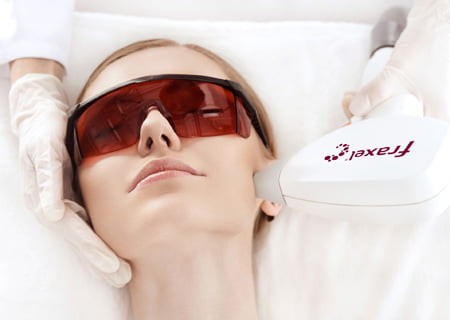
D. Energy-Based Tightening (CO2 CoolPeel, Deka Fractional CO2 Laser TM)
Useful when skin is intact but lax.
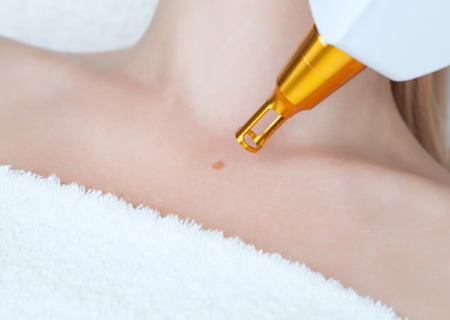
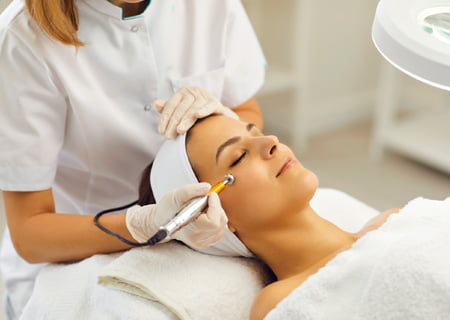
used for texture, sun damage, fine lines, scars, and pigment issues. It creates controlled micro columns of heat in the skin. This stimulates collagen and smooths the surface over time.
What it does
- Improves crepey skin
- Softens fine lines
- Improves acne scars
- Evens texture and pigment
- Tightens mild laxity
What it does not do
- It does not replace facelift surgery
- It does not treat deep folds
- It does not change fat volume
- It does not lift tissue
Neither replaces lost fat; they complement volume restoration.
E. Laser or Light-Based Resurfacing
When hollowness reveals etched lines, resurfacing smooths superficial irregularities and improves tone. It is commonly added after volume restoration so the surface settles over the new contour.
F. Mid-Face or Lower-Face Surgical Options
Surgery becomes relevant when volume loss reveals structural descent rather than isolated deflation.
1. Mid-Face Lift
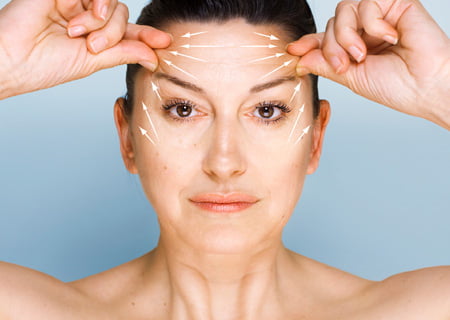
Repositions the malar fat pad and restores cheek shape. Suitable for patients with:
- a long lower eyelid
- flattened cheek projection
- early lid-cheek separation
2. Lower Facelift / SMAS Lift / Optimum Mobility facelift
Addresses descent patterns:
- jowling
- soft-tissue drift
- neckline changes related to volume loss
A SMAS-based approach restores contour without over-tightening or risk of facial nerve permanent injury
3. Eyelid Surgery (Blepharoplasty) / Brow Lift
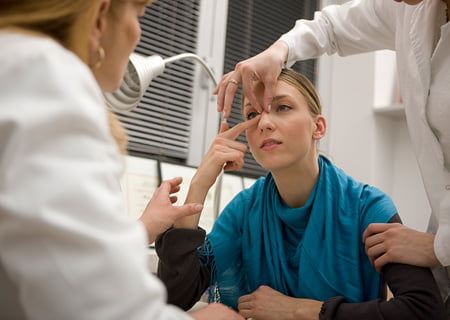
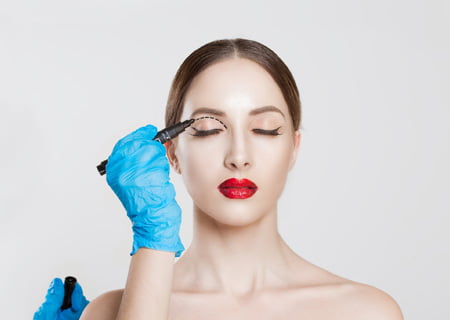
For hollowing combined with excess skin or fat prolapse. A conservative technique keeps the eye looking natural while correcting shadowing.
9. When to Consider Surgical Correction
Surgery is appropriate when:
- hollowing coexists with clear descent patterns
- fillers alone cannot restore cheek projection
- the jawline has lost definition despite adequate volume
- eyelid shape has changed due to both volume loss and skin excess
- the patient prefers a long-term, structural solution
Many patients combine a facelift or mid-face lift with deep-fat grafting for durable results.
10. Q&A
What does the Ozempic face look like?
A thinner, more angular version of the patient’s own face, with mid-face flattening, under-eye hollows, and early descent.
Will the Ozempic face go away?
Some fullness returns once weight stabilizes, but deep-fat compartments rarely restore themselves completely. Treatment is often needed for full correction.
How can I avoid it?
Avoid rapid loss, maintain protein intake, protect skin, and monitor changes. Early conservative volumization helps.
How can you tell if someone is on Ozempic?
You cannot. Facial thinning has multiple causes including dieting, stress, and natural aging.
11. References
-
Mayo Clinic — GLP-1 receptor agonists
https://www.mayoclinic.org -
Cleveland Clinic — Weight management medications
https://my.clevelandclinic.org -
National Institutes of Health — Obesity research
https://www.nih.gov -
American Society of Plastic Surgeons — Facial fat compartments
https://www.plasticsurgery.org