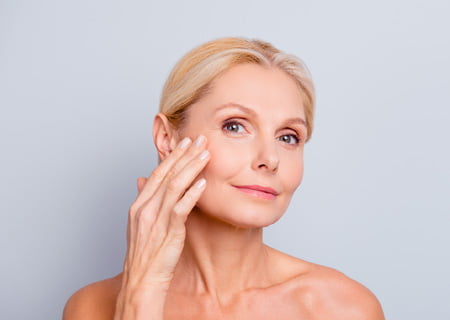
Why Older Adults Get Rhinoplasty

Rhinoplasty is not only a procedure for people in their 20s or 30s. Adults in their 50s, 60s, and beyond may consider nose surgery because the nose itself has changed with age, an old injury has become more noticeable, breathing has become more difficult, or they have simply decided to address a feature that has bothered them for many years. Age matters when planning surgery, but it is not the same thing as being unsuitable for it.
Table of Contents
- How the nose changes as we get older
- Why people consider rhinoplasty later in life
- Cosmetic and breathing concerns often overlap
- What is different about rhinoplasty in an older patient?
- Is there an age limit for rhinoplasty?
- Health and surgical candidacy matter more than a birthday
- Can Rhinoplasty Make an Older Face Look Younger?
- What kind of result makes sense later in life?
- Recovery after rhinoplasty in older adults
- Dr. Zakhary's approach
- Frequently asked questions
How the Nose Changes as We Get Older
People often say that the nose “keeps growing” throughout life. That is not quite what happens. The appearance of the nose continues to change because its skin, cartilage, supporting tissues, and underlying bone change over time.
A 2022 CT-based study looked specifically at age-related changes in nasal soft tissue and bone. Researchers found measurable differences in the position of the nasal tip, soft-tissue thickness, and bony support as people aged. The tip tended to move downward, while parts of the bony framework showed age-related resorption.
People also search
Earlier anatomical and surgical research describes a similar pattern. With age, the nasal tip may lose some of its support, the nose can appear longer, and a pre-existing dorsal hump may become more prominent. Changes in the surrounding midface and upper lip also affect how large or prominent the nose appears in relation to the rest of the face.
This means that someone who was perfectly comfortable with their nose at 35 may feel differently about it at 60. The change may be subtle, but facial proportions are relational: when one feature changes, the eye reads neighbouring features differently too.
Common changes seen in an aging nose
| Change | What a patient may notice |
|---|---|
| Less tip support | The tip sits lower or appears to droop |
| Changes in cartilage | Less definition or structural firmness |
| Changes in nasal bone | The framework and profile may look different |
| Reduced skin elasticity | Skin may not contract around a reshaped framework as readily |
| Relative nasal lengthening | The nose may appear longer in profile |
| Nasal valve or support changes | Breathing may become more difficult in some patients |
| Changes elsewhere in the face | The nose may look more prominent even without a dramatic change in size |
These are general patterns, not a checklist that applies to everyone. Genetics, skin thickness, previous trauma, sun exposure, past surgery, and the anatomy a person started with all influence how the nose ages.
Why People Consider Rhinoplasty Later in Life
There is no single reason older adults seek rhinoplasty, and it would be misleading to treat every case as an attempt to look younger.
For some patients, the concern genuinely developed later. A nasal tip that has gradually fallen can make the profile look longer or heavier than it did years earlier. Changes in support can also exaggerate an existing hump or asymmetry.
For others, the motivation has been there for decades. They may have disliked the shape of their nose since their teens but never felt ready for surgery. Work, children, finances, other medical priorities, or simply uncertainty may have come first. By the time they reach their 50s or 60s, the decision is often less impulsive and more specific: they know exactly which feature troubles them and may be looking for a relatively modest correction rather than a completely different nose.
Published research supports this mix of motivations. In a study examining aesthetic motivations among older rhinoplasty patients, the reasons for surgery included longstanding nasal deviation and several forms of acquired or structural deformity rather than a single stereotypical “aging” complaint.
A separate 2021 review of rhinoplasty in patients over 55 found that post-traumatic deformity and nasal obstruction were prominent reasons for treatment in the authors' own clinical series. Among 27 patients, 17 had post-traumatic deformity as their primary indication and 10 had obstructive nasal symptoms.
What one older-patient rhinoplasty series found
| Primary reason for surgery | Patients | Share of the study group |
|---|---|---|
| Post-traumatic deformity | 17 | 63% |
| Nasal obstruction | 10 | 37% |
| Total | 27 | 100% |
This table describes one published institutional series of patients over 55. It should not be interpreted as the distribution of reasons among all older adults considering rhinoplasty.
That distinction matters. An older person considering nose surgery may be addressing aging, an old accident, a functional problem, a feature that has always been present, or several of these at once.
Cosmetic and Breathing Concerns Often Overlap
One of the more important differences in later-life rhinoplasty is that appearance and function can become closely connected.
The nose depends on a relatively delicate framework to keep the airway open. The septum, tip-support mechanisms, and internal and external nasal valves all contribute. Age-related weakening of those structures may aggravate obstruction that was previously minor or compensated for.
Research on restorative rhinoplasty in aging patients has specifically highlighted nasal valve support and tip support as important considerations. Another review of the aging nose notes that age-related changes may contribute both to nasal obstruction and to dissatisfaction with appearance.
There are also people who have lived with the consequences of an old nasal fracture for years. A nose that healed slightly crooked may have seemed tolerable at 30, yet later changes in cartilage or support can make the deviation more noticeable or the airway less forgiving.
This is why an appropriate rhinoplasty assessment should not begin and end with photographs of the outside of the nose. Breathing, septal position, support, prior injury, and previous nasal surgery all matter.
Dr. Kristina Zakhary's rhinoplasty practice in Calgary addresses both the external appearance of the nose and its internal structure when assessing patients. Her published material also discusses the relationship between nasal reconstruction and airflow rather than treating the two as unrelated issues.
What Is Different About Rhinoplasty in an Older Patient?
The basic aim of rhinoplasty remains the same at any age: make changes that suit the patient's anatomy and goals while preserving or improving nasal function. The tissues being operated on, however, are not identical at 65 and 25.
Research examining aging nasal cartilage has found histological differences in older patients, including changes in the cartilage matrix, fewer chondrocytes, increased fibrosis around the cartilage, and changes in supporting attachments.
Skin also behaves differently with age. It may be thinner in some regions and less elastic overall, which can affect the way it settles over a newly shaped nasal framework. This is one reason a technically aggressive reduction is not automatically the best answer to a long or heavy-looking nose in an older patient.
The framework often deserves more support, not simply more removal.
Reviews of rhinoplasty with advancing age repeatedly emphasize careful preservation and restoration of structural support. Changes to the nasal tip, valves, cartilage, and bony framework need to be considered together rather than correcting whichever feature appears most obvious in a photograph.
That may lead to a more conservative plan. A slightly prominent bridge, for example, can sometimes belong naturally to an older face. Removing too much simply because it is technically possible can leave the nose looking less harmonious with the chin, forehead, cheeks, and other established facial features.
Is There an Age Limit for Rhinoplasty?
There is no universally accepted upper age at which rhinoplasty suddenly becomes inappropriate.
Someone who is 62 and medically fit may be a better elective-surgery candidate than someone considerably younger with uncontrolled cardiovascular disease, poorly controlled diabetes, heavy nicotine use, or another condition that increases operative risk.
The available literature on older-adult rhinoplasty therefore focuses heavily on patient selection , anatomy, expectations, and general health rather than setting a simple age cut-off. The 2021 systematic review of rhinoplasty in older adults concluded that this population has specific characteristics that need to be incorporated into treatment planning; it did not identify chronological age alone as a reason to exclude a patient.
More broadly, a 2023 multi-institutional analysis of short-term postoperative rhinoplasty complications found that overall complication rates were low in the studied population. Factors associated with risk included medical-status measures such as ASA classification, reinforcing the importance of assessing health rather than relying on age alone.
Health and Surgical Candidacy Matter More Than a Birthday
A consultation for a patient in later adulthood will usually include more attention to general medical history, medication use, and prior operations. That is not because every older patient is medically complex. It is simply more common for relevant health factors to accumulate with time.
Blood pressure, heart and lung health, diabetes, smoking or nicotine use, previous anaesthetic problems, medications that affect bleeding, nutritional status, and healing history can all influence the surgical plan. The surgeon also needs to know about previous nasal injuries and any earlier rhinoplasty, septoplasty, sinus surgery, or other procedures involving the nose.
Expectations deserve the same attention. Someone who wants a slightly less drooping tip and a straighter profile presents a very different planning problem from someone hoping rhinoplasty will make the entire face look 20 years younger.
That conversation is particularly important because facial aging does not occur only in the nose. The cheeks, eyelids, jawline, skin, lips, and chin continue to change as well. Altering the nose may improve facial balance, but it cannot reproduce the effect of treating every other age-related change.
Can Rhinoplasty Make an Older Face Look Younger?
Sometimes patients do feel that lifting a drooping tip or shortening the appearance of a long nose makes the face look fresher. That is plausible because nasal shape contributes to the way age is perceived. It should not, however, be presented as a predictable “anti-aging” effect.
The evidence on this question is mixed. One study of women over 55 examined whether simulated rhinoplasty alone made subjects appear younger and did not find a statistically significant rejuvenating effect in profile views.
That is useful information because it keeps the goal realistic. A rhinoplasty can improve nasal shape and facial proportion, but it is not a facelift, eyelid surgery, skin treatment, or substitute for broader facial rejuvenation.
For an older patient, a more sensible question is usually not “How many years younger will this make me look?” but “Will the nose fit my face better after surgery?”
What Kind of Result Makes Sense Later in Life?
Good rhinoplasty does not require erasing every sign of age or trying to reproduce the nose someone might have chosen at 20.
The most convincing result usually respects the rest of the face. A patient may benefit from better tip support, less downward rotation, a softer bridge, improved symmetry, correction of an old deformity, or treatment of a structural breathing problem. Another patient may need very little changed at all.
This is where mature patients can actually have an advantage in the decision-making process. Many arrive with a fairly settled sense of identity. They may want their nose improved without wanting it to look unfamiliar.
The surgeon's job is then to decide what degree of change the anatomy can support and whether that change is likely to look natural years later, not merely at the end of the first postoperative year.
Recovery After Rhinoplasty in Older Adults
Older age does not automatically mean a difficult recovery, although healing cannot be predicted by age alone.
The extent of surgery, skin characteristics, previous operations, general health, nicotine exposure, medications, and an individual's normal healing response all play a part. Someone undergoing a relatively limited primary procedure may have a very different experience from a patient whose nose requires extensive reconstruction after old trauma.
Another point worth understanding is that the period when a person feels socially presentable is much shorter than the time required for the nose to reach its final contour. Early bruising and obvious swelling settle first. More subtle swelling and changes in definition can continue for many months.
For that reason, patients considering surgery later in life should plan around the early practical recovery but judge the final result on a much longer timescale.
Questions worth sorting out before surgery
| Question | Why it matters |
|---|---|
| Are my medical conditions well controlled? | General health affects elective surgical risk |
| Have all medications and supplements been reviewed? | Some may affect bleeding or perioperative care |
| Do I use nicotine? | Nicotine can interfere with tissue healing |
| Have I had previous nose surgery or trauma? | Scar tissue and altered anatomy can change the operation |
| Is breathing part of my concern? | Functional problems should be examined, not assumed |
| Do I have enough help during early recovery? | Practical support makes the first postoperative period easier |
| Am I comfortable waiting for the final result? | Nasal refinement takes considerably longer than initial recovery |
Dr. Zakhary's Approach to Rhinoplasty Later in Life
Dr. Kristina Zakhary's published approach to rhinoplasty places considerable emphasis on facial proportions, nasal support, breathing, and keeping the result recognizably suited to the person rather than treating the nose as an isolated feature. Her current rhinoplasty information describes a Closed Mini Dissection and Ultrasonic Rhinoplasty approach used in appropriate patients.
One of her own comments, published in the Facial Cosmetic Surgery Knowledge Centre, is especially relevant when a patient is considering surgery later in life:
“The best surgery is the one that truly serves the patient, not the mirror.”
That is a useful standard for mature patients because not every age-related nasal change needs to be corrected. A lower tip may bother one person greatly and not another. A small dorsal hump may look perfectly at home on one face but dominate another.
A consultation should therefore establish what the patient actually wants to change, whether function is involved, how the nasal tissues have aged, and how much alteration will still look appropriate with the rest of the face.
Patients interested in surgery can read more about Dr. Zakhary's Calgary rhinoplasty approach .
Frequently Asked Questions
Is 50 too old for rhinoplasty?
No. Fifty is not considered an automatic upper limit for rhinoplasty. Published research specifically includes patients over 55 and describes successful aesthetic and functional treatment in appropriately selected older adults. The decision depends much more on health, nasal anatomy, the proposed operation, and expectations.
Can you have rhinoplasty in your 60s?
Potentially, yes. A medically fit patient in their 60s may still be considered for elective nose surgery. The surgeon will pay particular attention to tissue quality, structural support, medications, other medical conditions, and the changes the patient hopes to make.
What about rhinoplasty after 70?
There is no single number that answers this. At older ages, medical assessment becomes increasingly important, as does keeping the operation proportionate to the expected benefit. Age alone does not provide enough information to determine candidacy.
Why does my nose look longer as I get older?
Several things contribute. The nasal tip can move downward as support changes, soft tissue and cartilage age, and the bony framework remodels. Changes in the upper lip and midface can also make the nose appear longer in relation to surrounding features.
Can rhinoplasty correct a drooping tip caused by aging?
In suitable patients, rhinoplasty can reposition and support a drooping nasal tip. The surgeon needs to determine why the tip has dropped and how much existing support remains before deciding how it should be corrected. Older-patient rhinoplasty literature places particular emphasis on structural support rather than simple reduction.
Does your nose really keep growing throughout your life?
Not in the simple sense often suggested online. The nose changes because the underlying bone, cartilage, supporting tissue, and skin change with age. Those changes can create the impression of continued growth or lengthening. CT research has demonstrated measurable age-related changes in both nasal soft tissue and bone.
Can rhinoplasty improve breathing in an older person?
It may, if the breathing problem is caused by structural nasal obstruction. Septal deviation, weakened nasal valves, previous trauma, and loss of support can all contribute. The cause needs to be identified during examination because not every breathing complaint is a surgical problem.
Does rhinoplasty take longer to heal when you are older?
It can, but there is no universal age-based recovery timetable. Tissue quality, general health, the extent of surgery, previous operations, smoking or nicotine use, and individual healing are more useful predictors than age by itself.
Is rhinoplasty riskier after 60?
Not necessarily simply because the patient is over 60. Surgical risk is assessed from the person's overall health and the complexity of the proposed procedure. Medical classification and coexisting health factors can be more relevant than chronological age alone.
Can rhinoplasty make me look younger?
It may soften features associated with an aging nose, such as a downward-pointing tip, but it should not be sold as a predictable anti-aging procedure. Research examining whether rhinoplasty alone produces a younger perceived age has not shown a consistent effect.
Is it better to have a smaller nose when you are older?
Not necessarily. Making a nose smaller is only useful when reduction improves facial proportion and can be supported safely by the patient's anatomy. In some older noses, preserving or strengthening structural support may be more important than removing tissue.
Can rhinoplasty be combined with facelift or eyelid surgery?
In selected patients, facial procedures may be performed together, but this changes the length of surgery, anaesthetic considerations, and recovery. Whether combining operations makes sense depends on health, the extent of each procedure, and the surgeon's assessment rather than age alone.
What if my nose was broken many years ago?
Old nasal trauma is a common reason people seek rhinoplasty later in life. A previous fracture may leave visible deviation, internal septal problems, or impaired nasal airflow. Scar tissue and healed structural changes can make the operation more complex, so the surgeon needs to assess both the outside of the nose and the internal airway.
Can I have a very subtle rhinoplasty in my 50s or 60s?
Yes, provided the requested change is technically appropriate. Many older patients are not looking for a dramatically different nose. Small corrections to tip position, bridge contour, symmetry, or proportion may be more in keeping with the rest of a mature face than aggressive reshaping.
Will my nose continue to age after rhinoplasty?
Yes. Rhinoplasty changes the nasal structure, but it does not stop normal aging. The skin, cartilage, bone, and surrounding face will continue to change over time, which is another reason the operation should be planned with long-term facial balance in mind.
Considering Rhinoplasty Later in Life?
There is no requirement to have nose surgery at a particular age. Some patients consider it because their nose has visibly changed, while others finally address an old injury, a breathing issue, or a feature they have disliked for years.
The more useful question is not whether someone is “too old.” It is whether the concern can be addressed safely, whether the expected change fits the person's face, and whether surgery makes sense for their health and priorities.
Dr. Kristina Zakhary assesses both nasal appearance and function when planning rhinoplasty in Calgary. A consultation allows her to examine the nasal framework, discuss age-related changes and previous injuries, review breathing concerns, and determine what degree of change is realistic.
References
- Khetpal S, et al. Rhinoplasty in the Older Adult. Aesthetic Surgery Journal. 2021. PubMed PMID: 33739380. PubMed record
- Wang D, et al. Aging of the Nose: A Quantitative Analysis of Nasal Soft Tissue and Bone on Computed Tomography. Plastic and Reconstructive Surgery. 2022. PubMed PMID: 35994354. PubMed record
- Hong HR, et al. Aesthetic Motivation of Geriatric Rhinoplasty: The Surgical Outcome. Journal of Craniofacial Surgery. 2015. PubMed PMID: 26147023. PubMed record
- Cochran CS, Ducic Y, DeFatta RJ. Restorative Rhinoplasty in the Aging Patient. Laryngoscope. 2007. PubMed PMID: 17473672. PubMed record
- Rohrich RJ, Hollier LH. Rhinoplasty with Advancing Age. Plastic and Reconstructive Surgery. 2004. PubMed PMID: 15577372. PubMed record
- Helal HA, et al. Histological and Anthropometric Changes in the Aging Nose. Aesthetic Surgery Journal. 2019. PubMed PMID: 30247560. PubMed record
- Karimi K, et al. The Efficacy of Rhinoplasty Alone in Facial Rejuvenation. American Journal of Otolaryngology. 2011. PubMed PMID: 20493587. PubMed record
- Incidence and Risk Factors of Postoperative Complications After Rhinoplasty: A Multi-Institutional ACS-NSQIP Analysis. Journal of Craniofacial Surgery. 2023. PubMed PMID: 37487058. PubMed record
This article provides general educational information and does not replace individual medical assessment or advice.