Bulbous Nose Rhinoplasty: What Can Actually Be Refined?
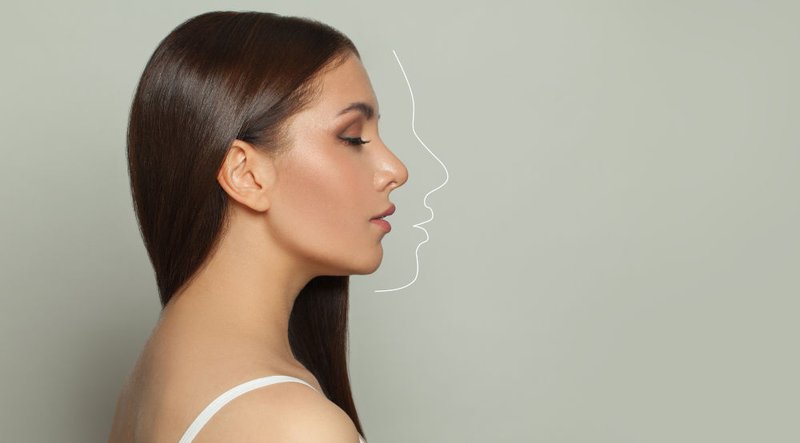
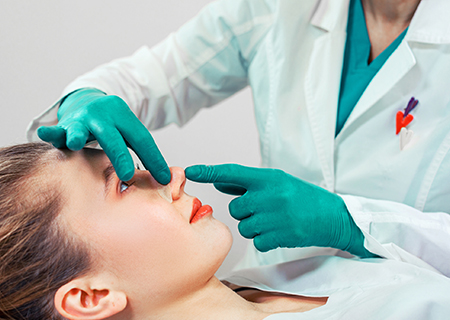
A bulbous nose usually means the nasal tip looks round, full, wide, or poorly defined. Rhinoplasty can often improve that shape, but the nose has to be assessed properly first. A rounded tip may come from broad cartilage, thick skin, weak support, excess soft tissue, nostril width, or a low bridge that makes the tip look heavier than it really is.
The best result is rarely the smallest tip. It is a tip that looks clearer, more refined, better supported, and still natural on the face.
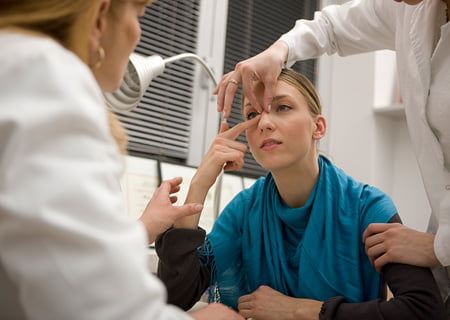
At Facial Cosmetic Surgery of Calgary, Dr. Kristina Zakhary evaluates the nasal tip, bridge, nostrils, skin thickness, septum, breathing function, and facial balance before recommending a surgical plan. This matters because bulbous tip rhinoplasty is not a one-technique operation. Two patients can use the same word, “bulbous,” and need very different surgery.
Table of contents
- What patients usually mean by a bulbous nose
- Why the nasal tip can look round or heavy
- The quick anatomy chart
- What rhinoplasty can and cannot change
- Surgical options for a bulbous nasal tip
- Thick skin and realistic tip definition
- Bulbous nose, boxy tip, wide nostrils: not the same problem
- Recovery after bulbous tip rhinoplasty
- Open or closed rhinoplasty for tip refinement
- Bulbous nose rhinoplasty for different facial types
- What Dr. Zakhary checks during consultation
- Questions worth asking before surgery
- Extended FAQ
What patients usually mean by a bulbous nose
People also search
“Bulbous nose” is not a precise medical diagnosis. It is a description patients use when the end of the nose feels too round or heavy.
In consultation, patients might say:
- the tip looks too big in photos
- the nose has no clear definition from the front
- the tip spreads when smiling
- the bridge looks acceptable, but the end of the nose looks soft
- the tip seems wide compared with the rest of the face
- makeup contouring helps, but only from certain angles
This is a common concern. It is also easy to misunderstand. A bulbous-looking tip is not always caused by excess tissue that can simply be removed. Sometimes the problem is actually weak support. Sometimes it is thick skin. Sometimes the nasal bridge is under-projected, so the tip looks more prominent by comparison.
That is why careful assessment matters more than the label.
Why the nasal tip can look round or heavy
The nasal tip is shaped mainly by the lower lateral cartilages, skin, soft tissue, and the support underneath. Small differences in these structures can change the entire appearance of the nose.
A rounded tip may come from one clear cause, but more often it is a mix.
| Cause | How it may look | Why it changes the surgical plan |
|---|---|---|
| Broad lower tip cartilages | Round, wide, or soft-looking tip | Cartilage may need reshaping and possible sutures |
| Thick nasal skin | Tip looks full with limited detail | The final result may be softer, not sharply sculpted |
| Weak tip support | Tip looks heavy, droopy, or spread out | Support may need to be rebuilt, not just reduced |
| Excess soft tissue | Puffy fullness around the lower nose | Tissue handling must be conservative |
| Wide nostril base | Nose looks wide from the front | Alar base work may be discussed |
| Low bridge | Tip appears too dominant | Bridge and tip balance may need to be planned together |
| Previous surgery | Tip looks scarred, stiff, or shapeless | Revision planning may require grafts |
The mistake is assuming every bulbous tip needs narrowing. Some need structure. Some need restraint. Some need bridge work. Some need time, especially when skin is thick.
The quick anatomy chart
Here is the practical way to think about it.
| If the main issue is... | The surgeon is likely studying... | Usual direction |
|---|---|---|
| Round tip shape | Lower lateral cartilages | Reshaping,possible suturing, controlled narrowing |
| Heavy tip | Support, skin, soft tissue | Support grafting, conservative refinement |
| Wide nostrils | Alar base and nostril flare | Possible nostril base refinement |
| Tip that drops | Tip support and rotation | Structural support, rotation planning |
| Poor definition after old surgery | Scar tissue and missing support | Revision strategy, often graft-based |
| Tip too strong from the side | Projection and bridge-tip balance | Careful reduction or repositioning |
This is not a treatment plan. It is a map. The real plan depends on examination.
What rhinoplasty can and cannot change
Rhinoplasty can often make a bulbous tip look more refined. It can reshape cartilage, improve support, adjust projection, soften nostril width, or create better balance between the bridge and tip.
What it cannot do is ignore biology.
Thick skin will not shrink like plastic wrap. A very wide tip cannot always become tiny without looking pinched. A weak nose should not be narrowed aggressively. A face with strong features may not suit a very delicate tip.
A good result may look like:
- clearer more defined tip shape
- less roundness from the front
- better definition in photos
- improved bridge-to-tip transition
- more stable tip support
- less heaviness when smiling
- a nose that looks more balanced, not obviously operated on
A poor plan often chases the smallest possible tip. That can create a pinched look, nostril distortion, visible asymmetry, or breathing problems later.
The better target is controlled refinement.
Surgical options for a bulbous nasal tip
There is no single “bulbous nose surgery.” The surgeon chooses from several techniques based on the anatomy.
Cartilage reshaping
The lower lateral cartilages form much of the nasal tip. If they are too broad, convex, separated, or poorly positioned, they may be reshaped.
Modern tip work is usually conservative. Removing too much cartilage can weaken the nose. It may look narrower at first, then collapse or distort with time. A strong nasal tip needs support.
Tip sutures
Sutures can guide the tip cartilages into a cleaner shape. They may narrow the domes, improve symmetry, reduce roundness, or create better definition.
This is quiet work. It is not dramatic cutting. It is more like adjusting the framework so the skin has a better shape to settle over.
Limited cartilage trimming
Small amounts of cartilage may be removed in selected cases. This can help when the cartilage itself is bulky.
The word “limited” matters. A bulbous tip should not be treated by hollowing it out. Too much removal can make the tip unstable and unnatural.
Cartilage grafting
Some patients are surprised to hear they may need cartilage added, not removed.
If the tip is weak, droopy, or shapeless, grafts may help support it. Cartilage may come from the septum, ear, or rib depending on the case. Grafts can improve projection, definition, rotation, and long-term stability.
This is common in revision rhinoplasty , but it can also be useful in primary surgery when the tip framework is weak.
Soft tissue management
In thick-skinned or heavy soft-tissue noses, the soft tissue has to be handled carefully. The goal is to reduce unnecessary bulk where safe, while protecting blood supply and healing.
Aggressive thinning is risky. Skin needs circulation. Over-thinning can create scarring, irregular healing, or poor tissue quality.
Alar base refinement
If the nostrils are wide or the nasal base is broad, alar base reduction may be considered. This is not automatically part of bulbous nose rhinoplasty.
The nostril base is unforgiving. Even small changes can be visible. The goal is to make the base look balanced, not tight or over-cut.
Bridge adjustment
Sometimes the tip looks bulbous because the bridge is low, flat, or underdefined. In that case, tip work alone may not give the best balance.
A small bridge change can make the tip look less dominant. This is especially relevant in some ethnic rhinoplasty cases, where bridge height, tip support, and skin thickness need to be planned together.
Thick skin and realistic tip definition
Skin thickness can decide how much refinement is actually visible.
Cartilage is the framework. Skin is the cover. If the cover is thick, the framework can be shaped beautifully and still look soft from the outside.
That does not mean thick-skinned patients cannot have good results. They can. But the result may be more refined than sharply defined. Swelling can also last longer, especially in the tip.
| Skin type | What it usually means for bulbous tip surgery |
|---|---|
| Thin skin | Shows definition well, but also reveals small irregularities |
| Medium skin | Often shows a good balance of shape and softness |
| Thick skin | Limits sharp definition and keeps swelling longer |
| Thick oily skin | May settle slowly and keep a rounder look for months |
| Scarred skin | Less predictable, especially after previous surgery |
This is one of the most important expectation-setting points. A patient with thick skin should not be promised a tiny, sharply cut tip. A better promise is careful structural refinement within the limits of the tissue.
Bulbous nose, boxy tip, wide nostrils: not the same problem
Many patients use these terms as if they mean the same thing. They do not.
| Patient description | Typical appearance | Main area of concern |
|---|---|---|
| Bulbous tip | Round, full, soft tip | Tip cartilage, skin, soft tissue |
| Boxy tip | Squared or flat-looking tip | Tip domes and cartilage shape |
| Wide nose | Broad from the front | Bones, bridge, nostrils, or tip |
| Wide nostrils | Nostrils flare or spread outward | Alar base |
| Droopy tip | Tip points downward | Tip support and rotation |
| Amorphous tip | No clear definition | Skin thickness, soft tissue, weak framework |
The right surgery depends on naming the real problem. A wide nostril base is not fixed the same way as a broad cartilage tip. A thick-skinned tip is not treated the same way as a thin-skinned boxy tip.
Recovery after bulbous tip rhinoplasty
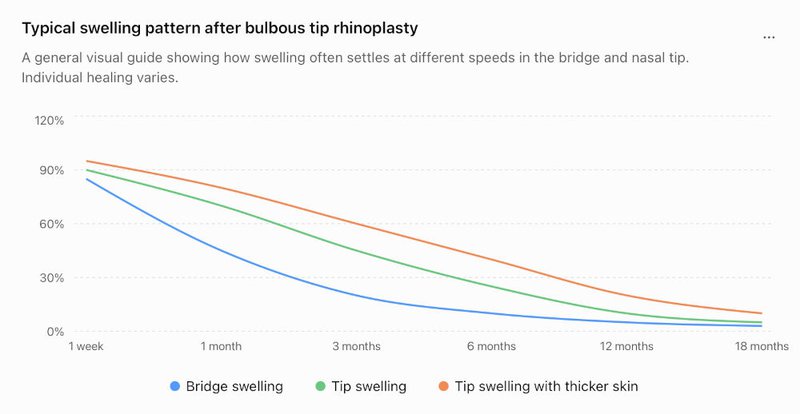
Most patients focus on the first week because of the splint, bruising, and swelling. For bulbous tip work, the longer story is the tip.
The bridge often settles earlier. The tip takes its time.
| Time after surgery | What many patients notice |
|---|---|
| First week | Splint, congestion, bruising, pressure, swelling |
| 2 to 3 weeks | Bruising fades, social recovery becomes easier |
| 1 to 3 months | Nose looks better, but the tip may still feel puffy |
| 3 to 6 months | Tip definition begins to show more clearly |
| 6 to 12 months | Shape continues to settle and soften |
| 12-24 months or more | Final tip refinement is easier to judge |
Swelling pattern chart
This is a simple visual guide, not a medical timeline. Healing varies. Thick skin, revision surgery, grafting, and scar tissue can all slow the final result.
| Time after surgery | What many patients notice |
|---|---|
| First week | Swelling, congestion, bruising, pressure, and a splint or tape. The nose does not show its final shape yet. |
| 2 to 3 weeks | Bruising usually fades. The nose may look presentable, but the tip often still looks firm or puffy. |
| 1 to 3 months | The bridge often looks more settled. The tip may still look rounded, especially in thicker skin. |
| 3 to 6 months | Tip definition slowly becomes easier to see. Some firmness is still common. |
| 6 to 12 months | The lower nose continues to soften and refine. Photos usually show gradual improvement. |
| 12-24 months or longer | Final tip definition is easier to judge. Thick skin or revision cases may take longer. |
The main point is patience. A bulbous tip is often the last area to refine after rhinoplasty. Early swelling can make the tip look larger than expected, even when the surgery was designed to make it more defined. This does not mean the result has failed. In many patients, the tip becomes cleaner and softer over the following months.
Open or closed rhinoplasty for tip refinement
Bulbous tip surgery may be done through an open or closed approach.
Open rhinoplasty gives the surgeon a direct view of the tip cartilages. This can be helpful when the tip needs suturing, grafting, asymmetry correction, or revision work.
Closed rhinoplasty places incisions inside the nostrils. It may be suitable for smaller adjustments in selected patients. When performed by a skilled surgeon who is familiar with nasal anatomy and rhinoplasty techniques, this approach can be helpful when the tip needs suturing, grafting, asymmetry correction, or revision work.
| Approach | Main advantage | Where it may fit |
|---|---|---|
| Open rhinoplasty | More control over tip structure visualization | Complex tip work, grafting, revision cases |
| Closed rhinoplasty | No external columellar incision | Complex tip work, grafting, revision cases when performs by a skilled and trained rhinoplasty surgeon |
Bulbous nose rhinoplasty for different facial types
A refined tip should still belong to the face.
On some faces, a very narrow tip looks strange. On others, a softly defined tip looks elegant and natural. Male patients often need refinement without feminizing the nose. Some female patients want a smaller tip, but still need enough structure to avoid a pinched look. Ethnic rhinoplasty requires even more care, because refinement should not erase identity.
The nose sits in the middle of the face, but it should not become the whole face. The bridge, lips, cheeks, chin, and jawline all affect how the tip is perceived.
A rounded tip may need less surgery than the patient expects once the rest of the face is considered.
What Dr. Zakhary checks during consultation
Dr. Kristina Zakhary’s background in Otolaryngology - Head and Neck Surgery and facial plastic surgery is relevant for this type of rhinoplasty. Bulbous tip correction is not only surface reshaping. It involves the support of the nasal framework and, in many patients, the airway.
During consultation at Facial Cosmetic Surgery of Calgary, she may look at:
- tip cartilage size
- cartilage strength
- skin thickness
- soft tissue fullness
- nasal bridge height
- nostril width
- septal position
- breathing symptoms
- previous injury
- previous rhinoplasty
- front-view balance
- profile balance
- chin relationship
- patient expectations
The consultation is where the word “bulbous” becomes specific. Is the issue cartilage? Skin? Nostril width? Weak support? Scar tissue? More than one?
That answer shapes the operation.
Questions worth asking before surgery
| Question | Why it matters |
|---|---|
| Is my tip round because of cartilage, skin, or soft tissue? | Different causes need different techniques. |
| Will my skin thickness limit definition? | Thick skin can soften the final shape. |
| Do I need support grafts? | Some tips need strengthening, not only narrowing. |
| Would nostril narrowing help? | A wide base can make the whole lower nose look broad. |
| Could tip refinement affect breathing? | Narrowing should not weaken or narrow the airway. |
| How long will the tip stay swollen? | Tip swelling can last longer than patients expect. |
| What would make my result look overdone? | This helps prevent a pinched or artificial appearance. |
| Is open or closed surgery better for my case? | The answer depends on the amount of structural work needed.and the training, skill and expertise of the rhinoplasty surgeon |
Extended FAQ
What is a bulbous nose?
A bulbous nose usually means the nasal tip looks round, wide, full, or poorly defined. It may be caused by cartilage shape, thick skin, excess soft tissue, weak support, or nostril width.
Can rhinoplasty fix a bulbous nose?
Rhinoplasty can often improve a bulbous nasal tip. The amount of change depends on the cause. Cartilage-related roundness can often be refined more visibly than fullness caused mainly by thick skin.
Does bulbous nose surgery make the tip smaller?
Sometimes, but smaller is not always the right goal. A good result usually means better definition, better support, and better balance. Over-narrowing can look pinched or create breathing problems.
Why does my nasal tip look bigger when I smile?
Smiling moves the muscles around the nose and upper lip. In some people, the tip drops, spreads, or looks wider during smiling. Surgery may improve support or rotation, but normal facial movement remains.
Can a bulbous tip be fixed without surgery?
Non-surgical rhinoplasty cannot truly narrow a bulbous tip. Filler can sometimes change balance by adding volume elsewhere, but it does not reduce cartilage, thin skin, or create permanent tip definition.
Is thick skin bad for rhinoplasty?
Thick skin is not bad, but it changes the plan. It can hide fine definition and hold swelling longer. Patients with thick skin can still have improvement, but the result is usually softer.
Can thick nasal skin be thinned?
Only to a limited and careful degree. Skin and soft tissue need healthy blood supply. Aggressive thinning can cause scarring, poor healing, or contour problems.
Will cartilage be removed from my nasal tip?
It depends. Some patients need a small amount of cartilage trimming. Others need cartilage reshaped. Some need cartilage added for support. The older idea of removing a lot of cartilage is not suitable for many noses.
Why would cartilage be added to a bulbous nose?
Because a round or heavy tip can come from weak support. Adding cartilage can help the tip hold a cleaner shape. Support can sometimes make the tip look less bulky, even though material is being added.
What is the difference between a bulbous tip and a boxy tip?
A bulbous tip is usually round and full. A boxy tip looks more squared or flat across the front. They may overlap, but the cartilage pattern can be different.
Is nostril narrowing part of bulbous nose rhinoplasty?
Only when nostril width contributes to the concern. Some patients need alar base refinement. Others only need tip cartilage work. Nostril narrowing should be conservative because over-resection can look unnatural.
Is open rhinoplasty better for a bulbous tip?
Open rhinoplasty can give the surgeon more visualization of the tip cartilages. Closed rhinoplasty may be suitable for complex cases and changes. The better approach depends on the surgeon’s training, skill and expertise.
How long does swelling last after bulbous tip rhinoplasty?
Most social swelling improves in the first few weeks, but nasal tip swelling can last many months. Thick-skinned patients may see continued refinement for two years or longer.
When will I see the final tip shape?
The tip often changes slowly. Some definition appears in the first few months, but the final shape may take 24 months or more, especially with thick skin or revision surgery.
Can bulbous nose rhinoplasty look natural?
Yes, when the plan is conservative and suited to the patient’s face. The most natural results usually come from refining the framework without making the tip too small.
Is bulbous nose rhinoplasty different for men?
The same anatomy is assessed, but the aesthetic goal may differ. Many male patients want a cleaner tip without making the nose look too delicate or narrow.
Is bulbous nose rhinoplasty common in ethnic rhinoplasty?
Yes, but the plan varies widely. Some patients need bridge support, some need tip refinement, some need nostril base work, and some need only subtle changes. Preserving identity is part of a good result.
Can bulbous nose rhinoplasty help breathing?
It can if functional problems are addressed at the same time. If a patient has septal deviation, nasal valve weakness, or obstruction, breathing should be discussed before cosmetic narrowing is planned.
Can a bulbous tip come back?
The original cartilage shape usually does not simply return. But swelling, scar tissue, weak support, or thick skin can affect the final look. In some revision cases, the tip may need additional support.
Who is a good candidate?
A good candidate has a rounded or poorly defined tip, realistic expectations, and a willingness to accept a result that fits their own anatomy. The best candidates want refinement, and improvement not a copied or overly reduced pinched nose.
How do I know what is realistic for my nose?
You need an in-person consultation. Dr. Kristina Zakhary can assess your skin, cartilage, breathing, nostril shape, bridge, and facial balance before explaining what kind of refinement is realistic
Final word
Bulbous nose rhinoplasty is not about shaving the tip down until it looks small. That approach can create problems.
The better work is quieter: reshape what is too broad, support what is weak, respect the skin, protect breathing, and keep the nose in proportion with the face.
For patients in Calgary considering rhinoplasty for a rounded or heavy nasal tip, a consultation with Dr. Kristina Zakhary at Facial Cosmetic Surgery of Calgary can help identify what is really causing the bulbous appearance and what kind of refinement is safe.