What Is a Revision Rhinoplasty?
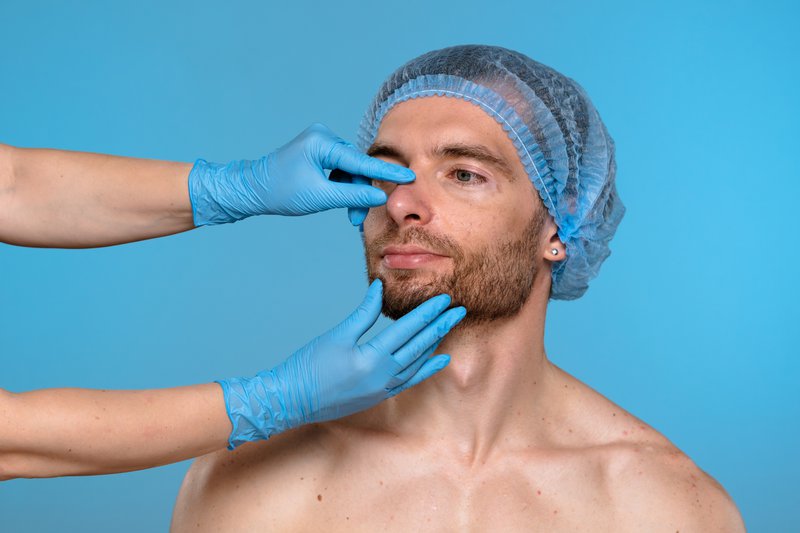
Revision rhinoplasty, also referred to as secondary rhinoplasty or rhinoplasty revision, is surgery performed after a previous nose operation when the outcome is incomplete, unstable, or unsatisfactory.
Some patients seek revision because the nose does not look as expected. Others return because breathing did not improve or became worse. In more complex cases, structural support was weakened during the first operation and the nose gradually changed shape over time.
Revision surgery is fundamentally different from primary rhinoplasty . It does not begin with untouched anatomy. It begins with scar tissue, altered cartilage, and structural changes that may limit what is possible.
People also search
The purpose of revision rhinoplasty is not to “start over.” It is to restore structure, improve proportion, and stabilise nasal function while working within realistic anatomical limits.
Table of Contents
- Why Patients Consider Secondary Rhinoplasty
- Why Revision Rhinoplasty Is More Technically Demanding
- Structural Problems That Often Require Rhinoplasty Revision
- Tip Revision Rhinoplasty
- Ultrasonic Revision Rhinoplasty
- Timing: When Is It Safe to Proceed
- Revision Rhinoplasty Success Rate
- Revision Rhinoplasty Cost
- Choosing a Revision Rhinoplasty Specialist
-
Frequently Asked Questions
Why Patients Consider Secondary Rhinoplasty
The reasons vary.
In some cases, swelling simply settles and the final shape does not match expectations. In others, deeper issues become visible months later.
Common concerns include persistent deviation, over-resection of cartilage, breathing difficulty, tip irregularity, or asymmetry that becomes more noticeable over time.
Occasionally, the original surgery improved one concern but created another. A hump may be removed, yet the tip becomes unsupported. The bridge may look straight in profile but narrow excessively from the front.
There is also a psychological component. The nose sits at the centre of the face. Even small structural irregularities draw attention.
Revision rhinoplasty is often pursued when the patient feels something is structurally off rather than simply different from a filtered expectation.
Why Revision Rhinoplasty Is More Technically Demanding
Secondary rhinoplasty is not just a repeat procedure. It is reconstructive.
The surgeon must work through scar tissue that changes tissue planes and reduces elasticity. The septum may no longer have usable cartilage. The internal nasal valves may be weakened. Skin may have thinned or thickened depending on prior manipulation.
In many revision cases, cartilage must be harvested from another site, typically the ear or rib, to rebuild support.
This is why patients often search for a revision rhinoplasty specialist rather than a general cosmetic provider. Structural judgement matters more in secondary surgery than in primary cases.
Small miscalculations can compound quickly in a revision setting.
Structural Problems That Often Require Rhinoplasty Revision
Revision rhinoplasty usually addresses one or more structural concerns.
Persistent Deviation
If the septum or nasal bones were not stabilised adequately during the first procedure, deviation can remain. In some cases, it worsens as healing progresses.
Internal Valve Collapse
When too much cartilage was removed from the middle vault, breathing resistance can develop. Patients often describe this as obstruction despite a nose that appears narrow.
Pinched Tip
Over-resection of lower lateral cartilages can create a constricted or overly narrow tip. This may also affect airflow.
Drooping or Over-Rotated Tip
Tip position sometimes shifts after swelling resolves. A nose may appear lifted immediately post-surgery and then settle lower than intended. Conversely, excessive rotation may become more obvious over time.
Dorsal Irregularities
Small contour irregularities can appear as shadows once swelling subsides fully.
Each of these issues requires a different correction strategy. No two revision surgeries are identical.
Tip Revision Rhinoplasty
Tip revision rhinoplasty focuses specifically on the nasal tip. It may involve reshaping cartilage, adding graft support, or adjusting projection.
Patients sometimes request tip revision because they are satisfied with the bridge but feel the tip appears bulbous, asymmetric, or unsupported.
However, the tip depends heavily on structural integrity. If cartilage was removed aggressively during the first surgery, revision often requires reinforcement rather than reduction.
Limited tip revision is possible in selected cases, but a comprehensive evaluation determines whether isolated correction is appropriate.
Ultrasonic Revision Rhinoplasty
Ultrasonic revision rhinoplasty refers to the use of piezoelectric instruments for bone reshaping.
These tools allow controlled modification of nasal bones with less soft tissue trauma compared to traditional techniques. In revision cases, where anatomy may already be compromised, precision becomes even more important.
It is important to understand that ultrasonic instrumentation is a method, not a guarantee of outcome. Surgical judgement determines success. Technology supports execution.
Timing: When Is It Safe to Proceed
Revision surgery should not be performed too early.
Swelling from primary rhinoplasty can persist for up to twelve months, sometimes longer in thick skin patients.
Operating before full stabilisation increases the risk of unnecessary correction. What appears irregular at six months may soften significantly by one year.
In most cases, surgeons advise waiting at least one year before undergoing secondary rhinoplasty unless severe functional impairment exists.
Patience protects outcome.
Revision Rhinoplasty Success Rate
Patients frequently ask about revision rhinoplasty success rate.
Success in revision surgery is measured differently than in primary surgery. It is not about dramatic transformation. It is about structural stability and meaningful improvement.
When properly planned, secondary rhinoplasty can significantly improve both breathing and contour.
However, revision procedures carry more variables. Scar tissue, prior cartilage removal, and skin thickness all influence predictability.
An honest consultation defines what improvement means for that specific anatomy. Perfection is not a surgical endpoint. Stability and proportion are.
Revision Rhinoplasty Cost
Revision rhinoplasty cost is typically higher than primary surgery.
The reasons are practical:
-
Longer operative time
-
More complex structural reconstruction
-
Potential cartilage harvesting
-
Greater planning requirements
-
Higher technical demands
If rib grafting is required, cost increases due to added operative steps.
Because each revision case differs significantly, accurate cost estimation requires in-person evaluation. Online estimates are rarely reliable.
Choosing a Revision Rhinoplasty Surgeon
Searching for the best revision rhinoplasty surgeon often leads to marketing claims. A better approach is to assess structural experience.
Important considerations include:
-
Experience with reconstructive nasal techniques
-
Comfort with cartilage grafting
-
Understanding of nasal airway mechanics
-
Ability to explain limitations clearly
-
Willingness to decline surgery when unrealistic
A revision rhinoplasty expert does not promise a perfect nose. They explain structural possibilities and constraints.
Revision rhinoplasty before and after photos should show refined balance and improved support rather than dramatic alteration.
Frequently Asked Questions
What is the difference between revision rhinoplasty and secondary rhinoplasty?
There is no difference. Both terms describe surgery performed after a previous rhinoplasty.
Is revision rhinoplasty riskier than primary rhinoplasty?
It carries higher technical complexity because of scar tissue and altered anatomy. With proper planning and experience, it can be performed safely.
How long should I wait before considering rhinoplasty revision?
Most surgeons recommend waiting at least 12 months to allow full swelling resolution.
Can tip revision rhinoplasty be performed alone?
In selected cases, yes. If structural support is intact and the concern is isolated to the tip, focused correction may be possible.
What is ultrasonic revision rhinoplasty?
It involves using piezoelectric tools for controlled bone reshaping during revision surgery.
Why is revision rhinoplasty cost higher?
It requires more time, more reconstruction, and often additional grafting compared to primary surgery.
Can revision rhinoplasty fix breathing problems?
Yes, sometimes it can, especially when internal valve collapse or septal instability is present.
What is a realistic expectation for secondary rhinoplasty?
Improvement and structural stability. Not absolute perfection.
Revision rhinoplasty is reconstructive surgery performed after prior nasal surgery to restore form and function. It demands careful assessment, structural planning, and realistic goals.
The objective is refinement, stability, and improved breathing, not reinvention.